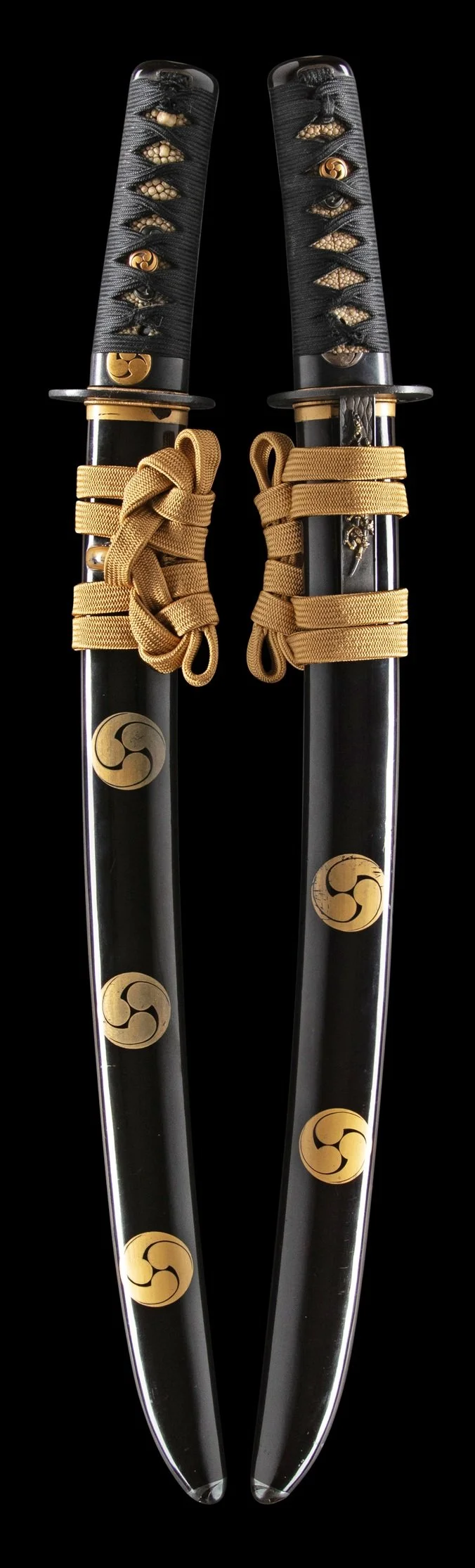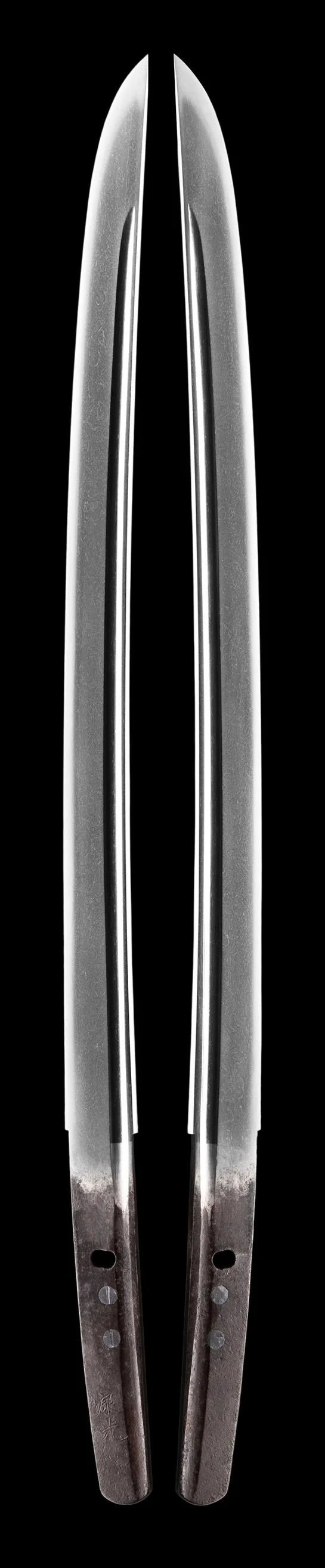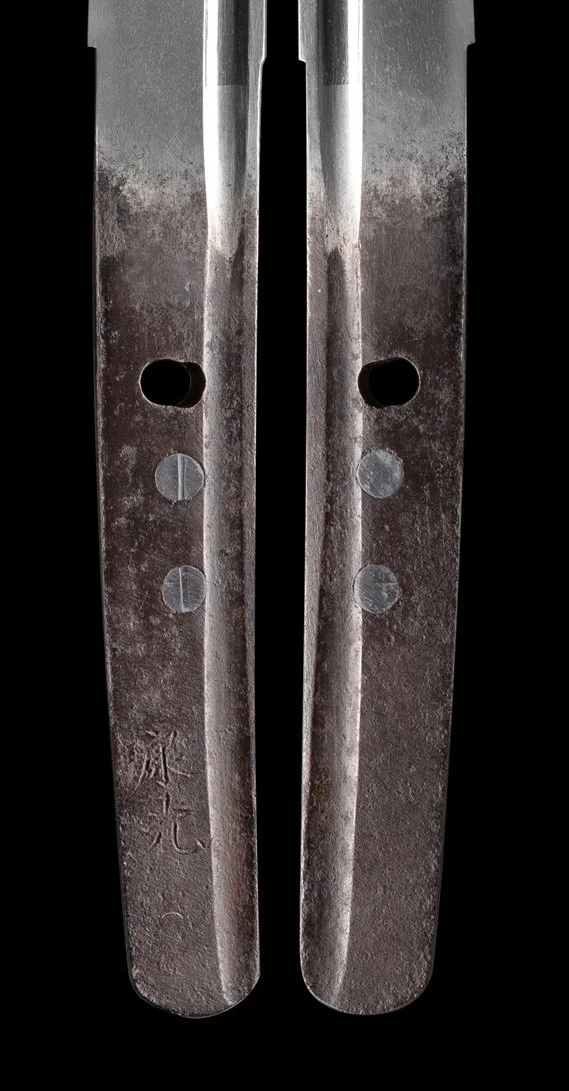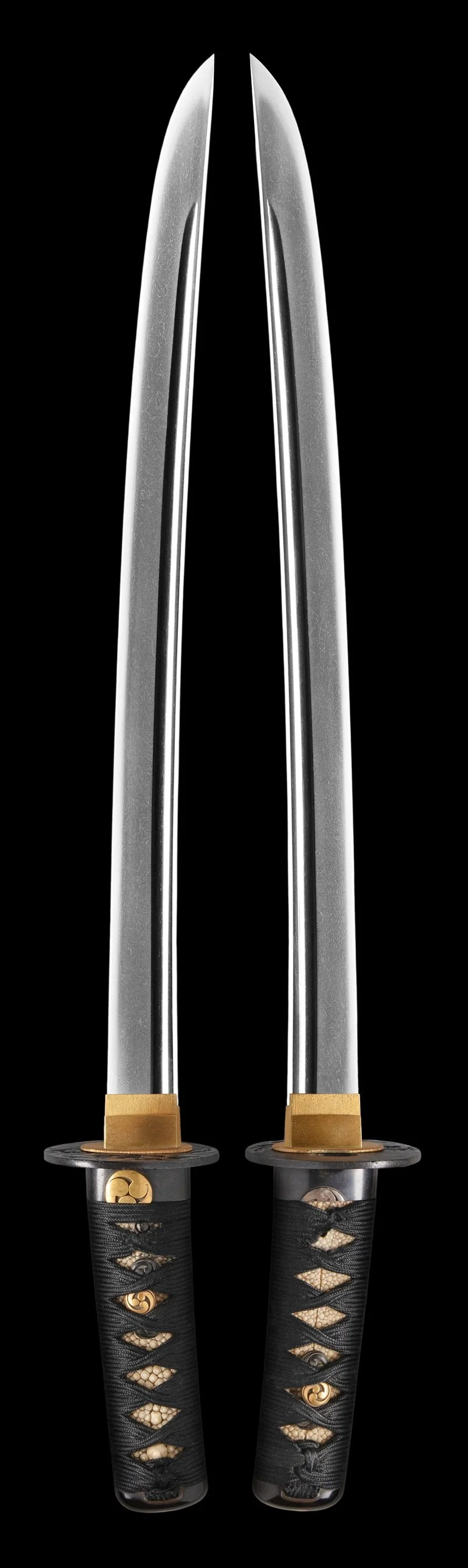
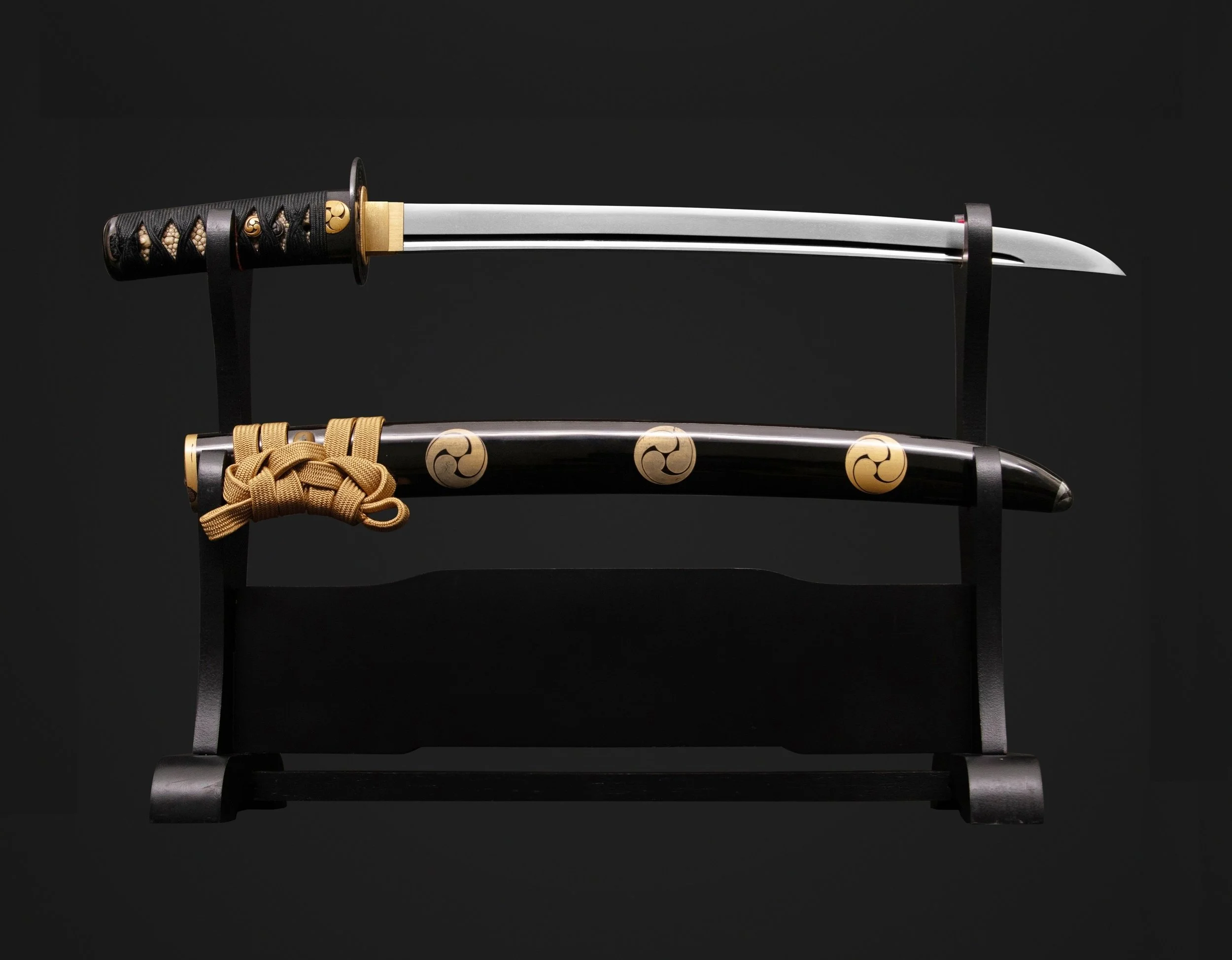
Yasumitsu Ko-Wakizashi, Oei Era, 1420’s
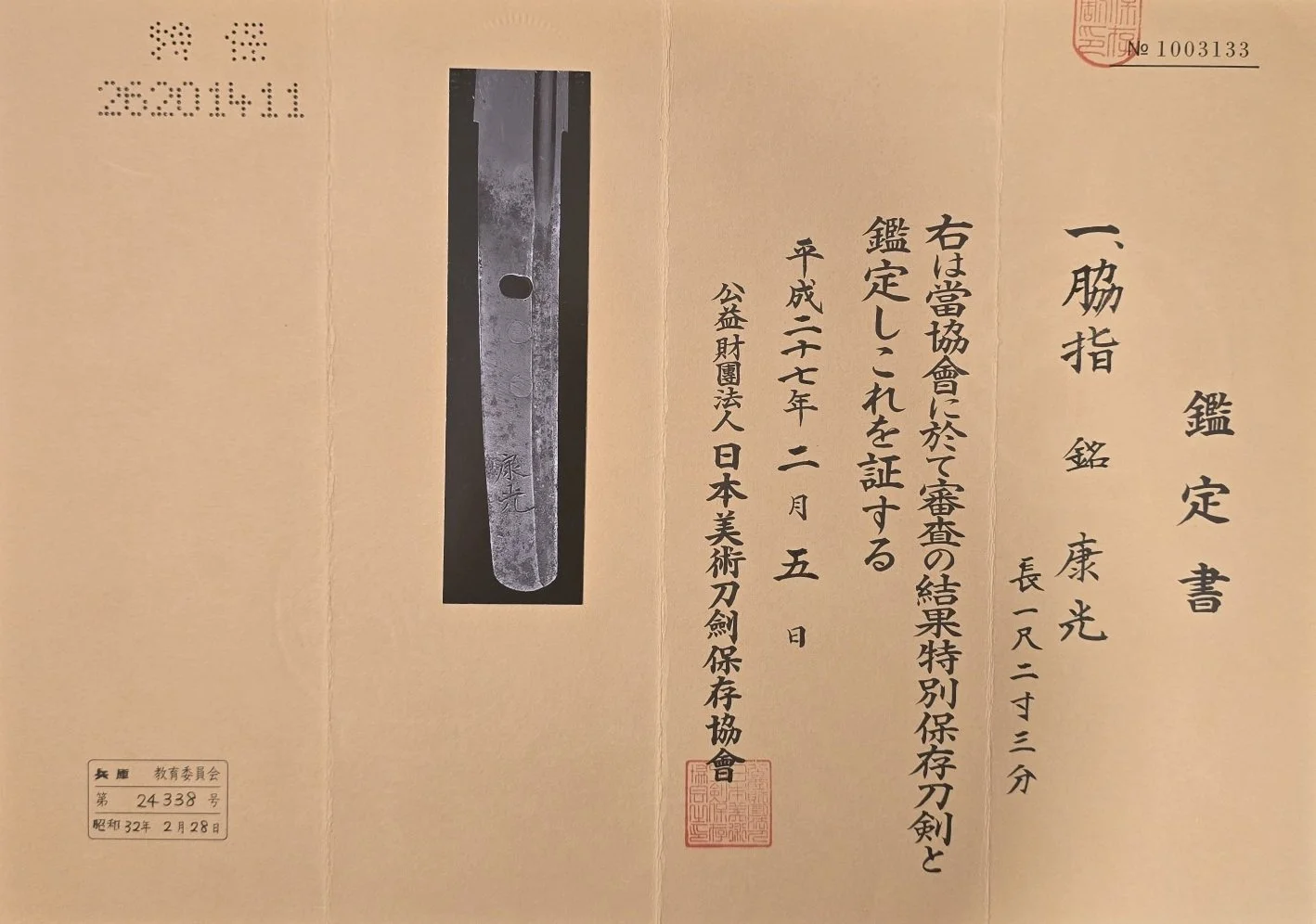
NBTHK Tokubetsu Hozon, with Koshirae
$11,250
Features:
A defining example of Oei Bizen workmanship, this is a rare signed chu-Koto O-Tanto by Osafune Yasumitsu. The Oei era was a time of transition: as the Yoshino civil wars concluded, and warfare evolved, the shape of tachi reverted from the oversized sugata of Nanboku-cho jidai back to the graceful koshizori of Kamakura jidai. The shape of tanto evolved also, by returning to a narrower mihaba, yet retaining a longer nagasa, effectively making them ko-wakizashi. Many tanto from Oei have this distinction with a nagasa longer than 1 shaku, as is the case with this example by Yasumitsu. Yasumitsu was a leading, and famous swordsmith from this time, who along with Morimitsu and Moromitsu formed the backbone of the continued lineage of mainline Osafune school. The three are often referred to as ‘Oei no San Mitsu’, the three ‘Mitsu’ of the Oei era.
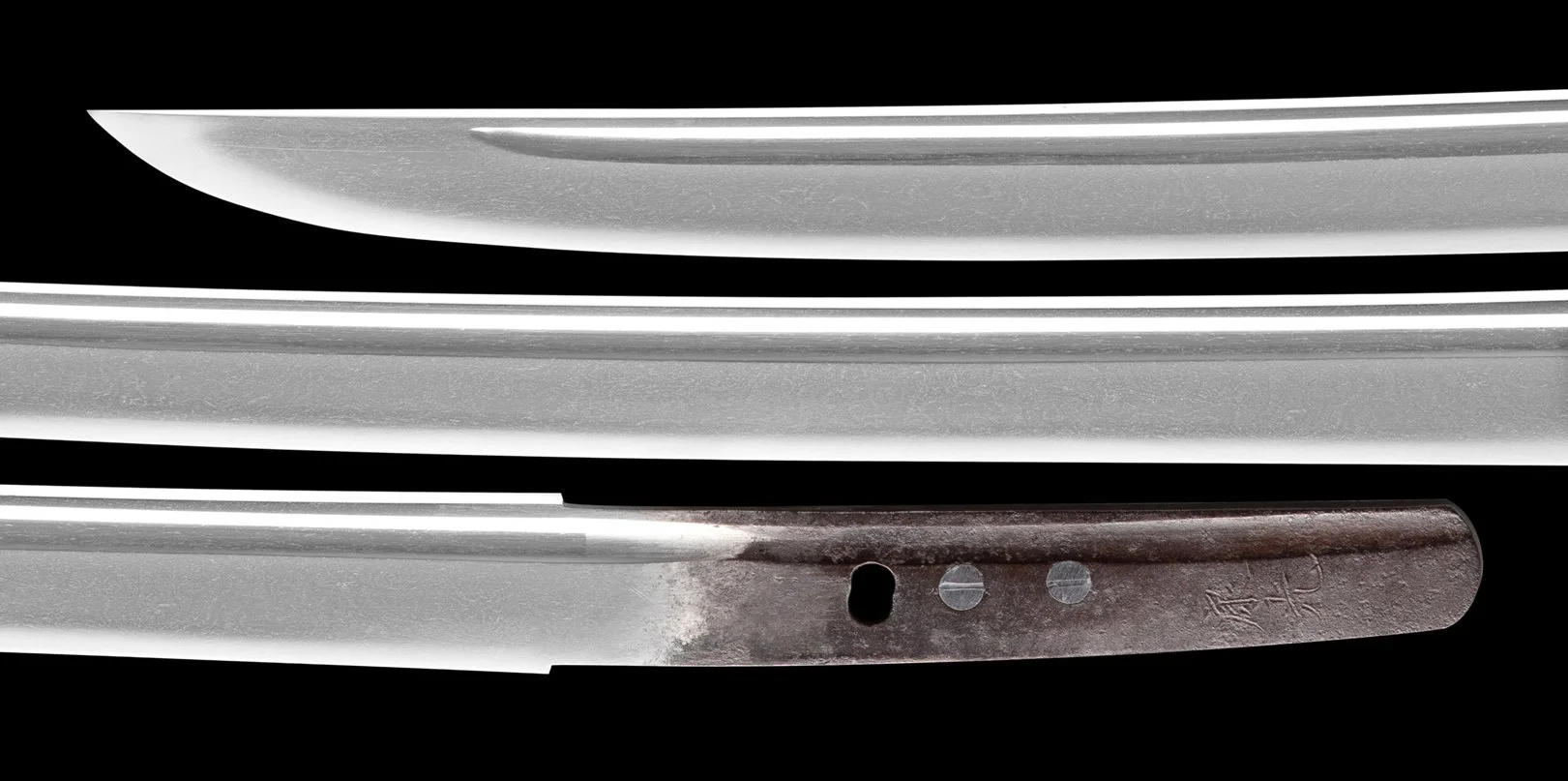
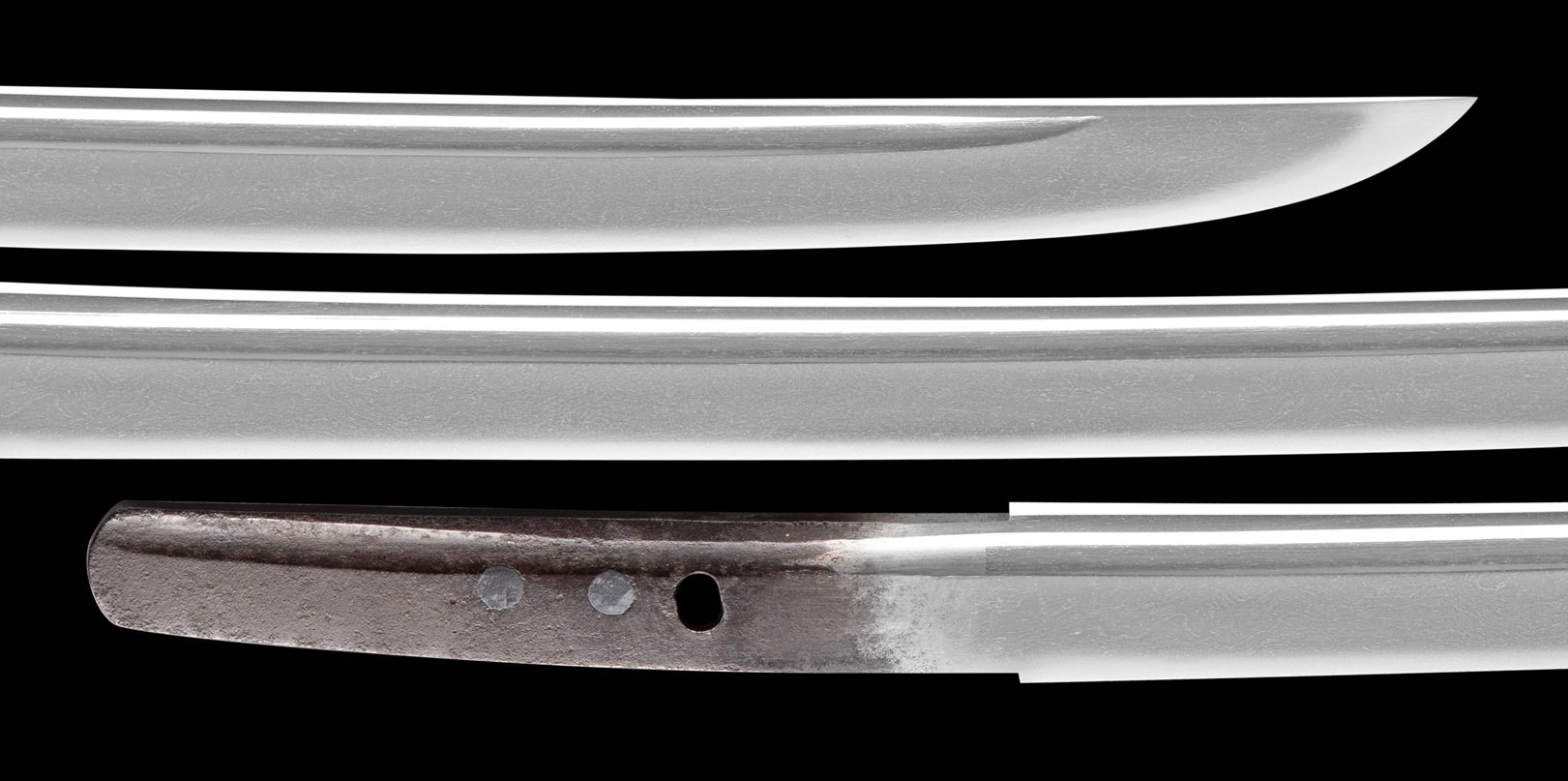
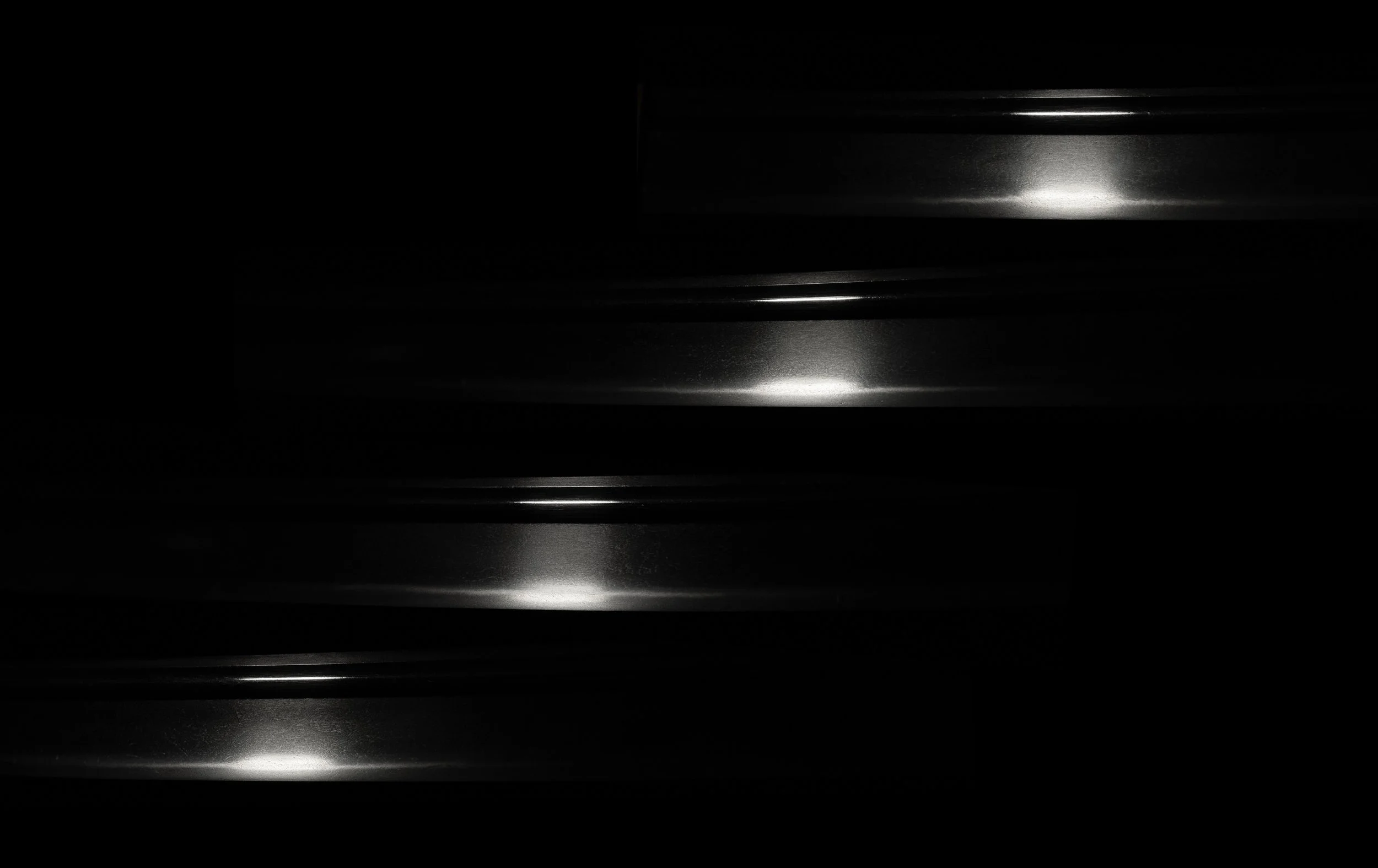
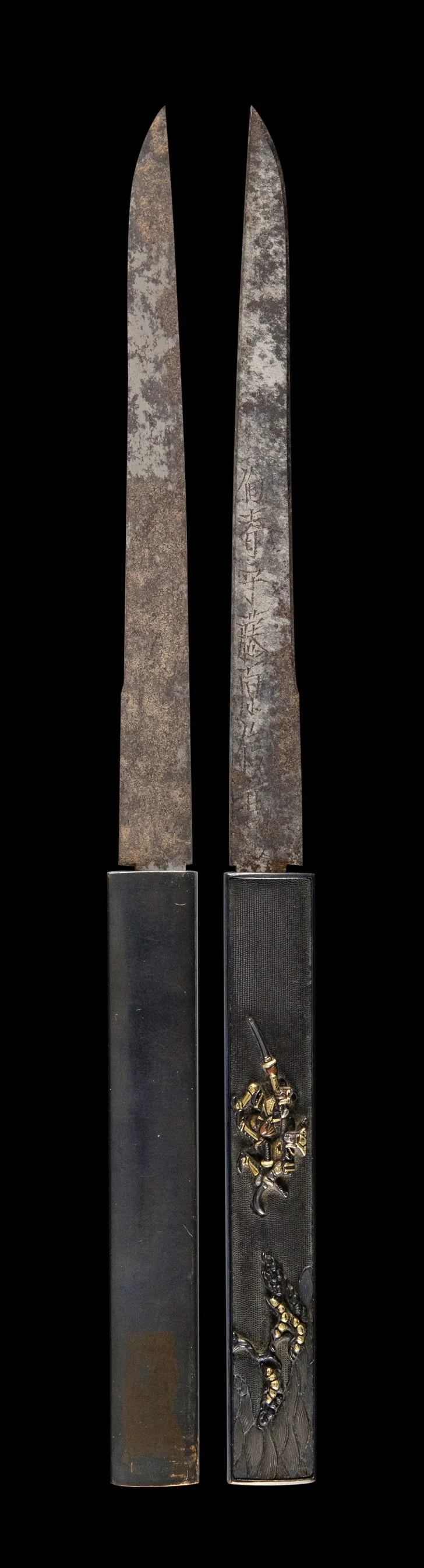
The blade features the longer nagasa and straighter sugata associated with the classic shape of early Muromachi period tanto. There are bo-hi carved on both sides of a hira-zukuri construction. The nakago is signed nijimei Yasumitsu and there are two older, and plugged, mekugi-ana. The nakago is slightly suriage and the blade was originally longer. The jigane is a refined itame hada with some small mixture with mokume. Notably, there is a distinct and straight bo utsuri shadow that parallels the hamon. The hamon is a straighter Bizen style suguha that features small gunome formations nestled inside a crisp nioi guchi. The hamon finishes in a classic maru boshi.
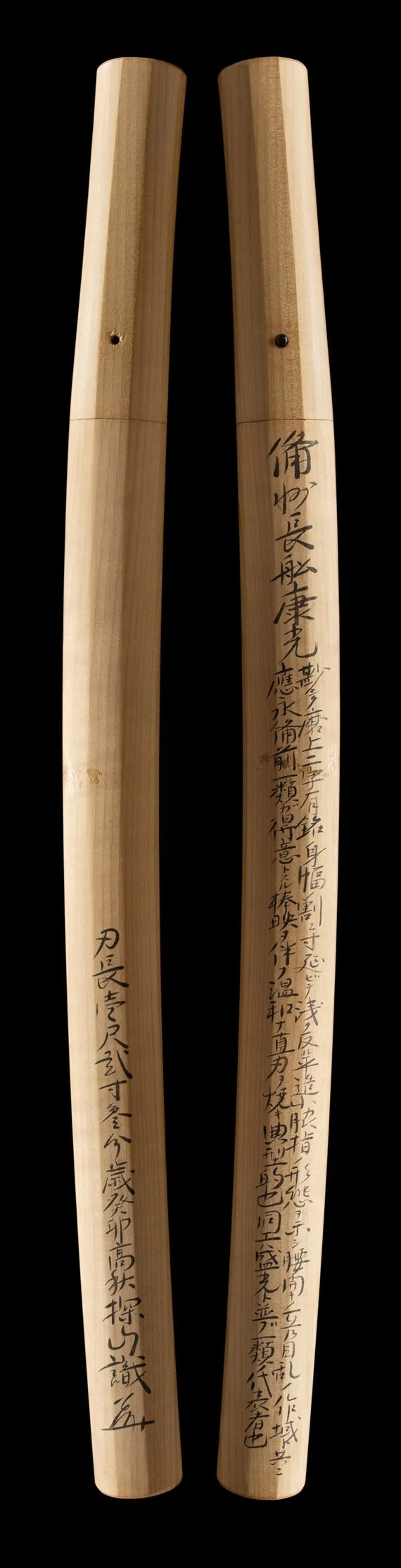
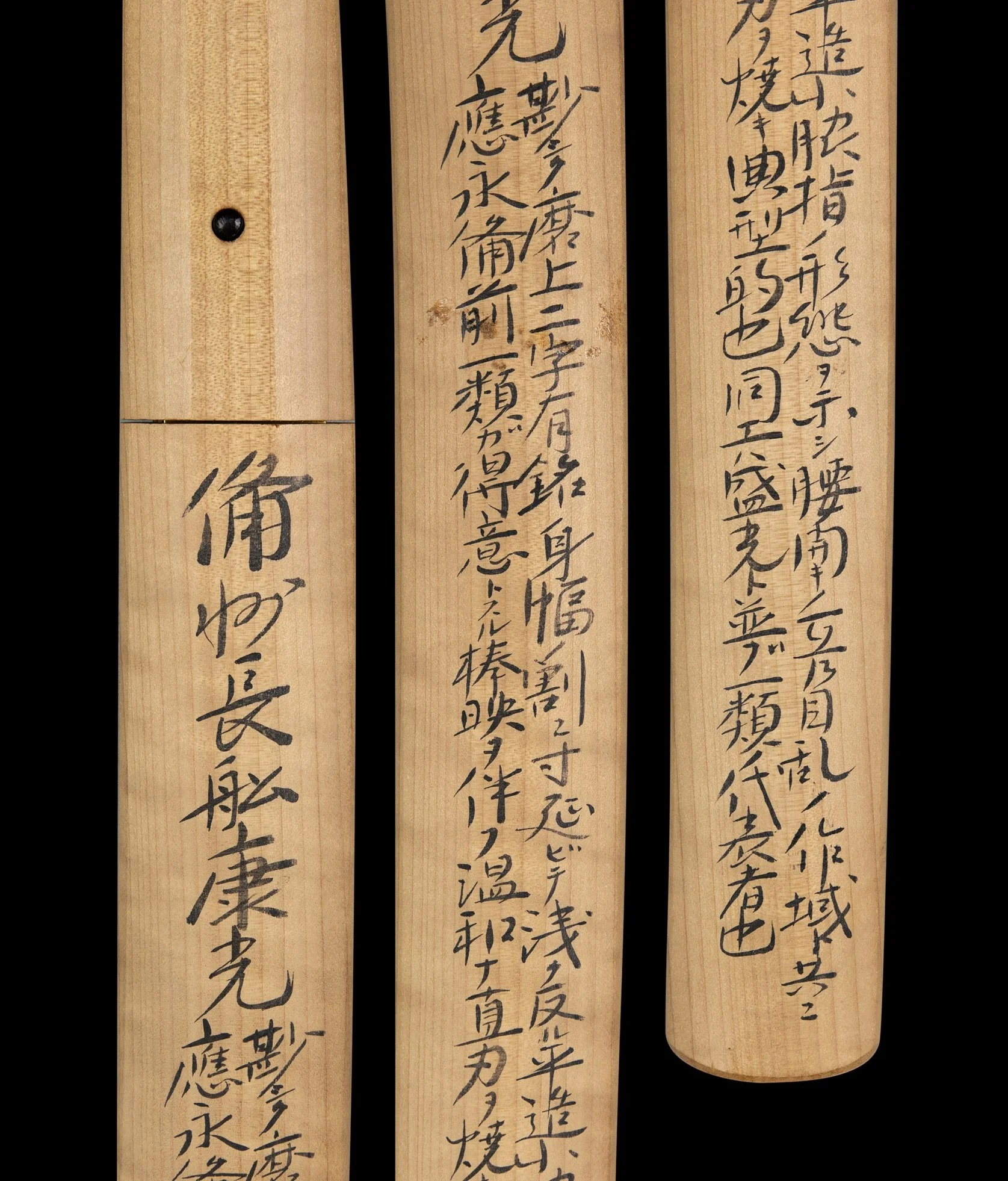
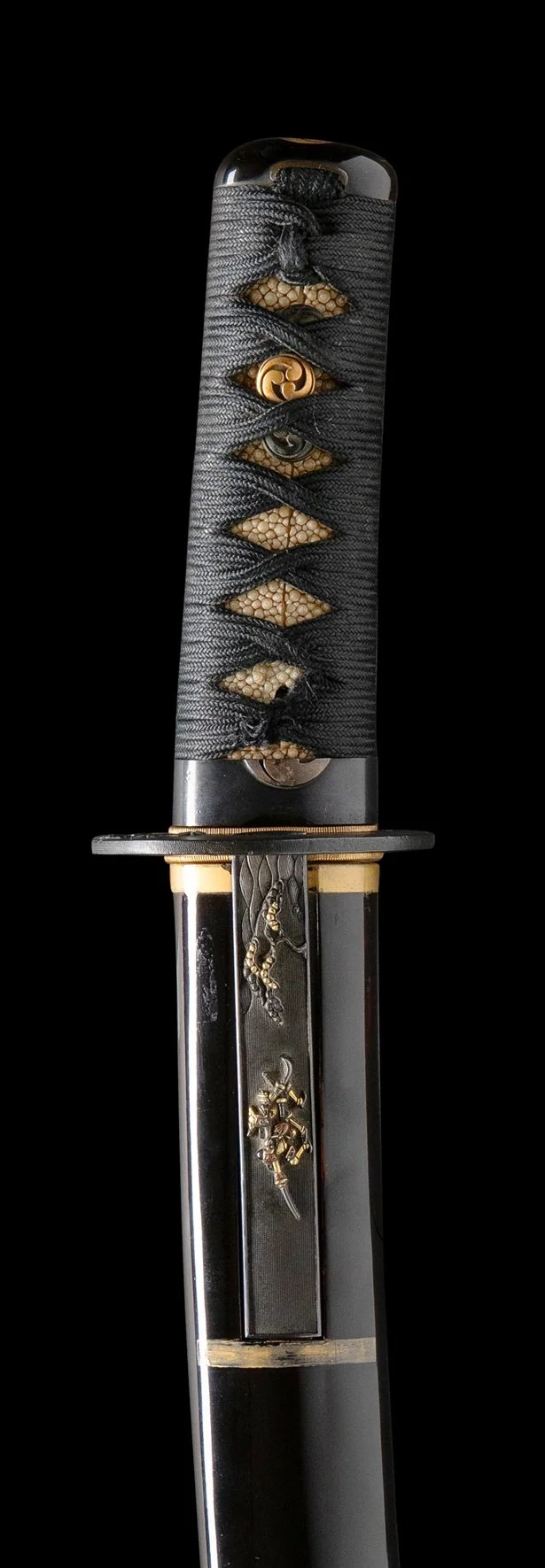
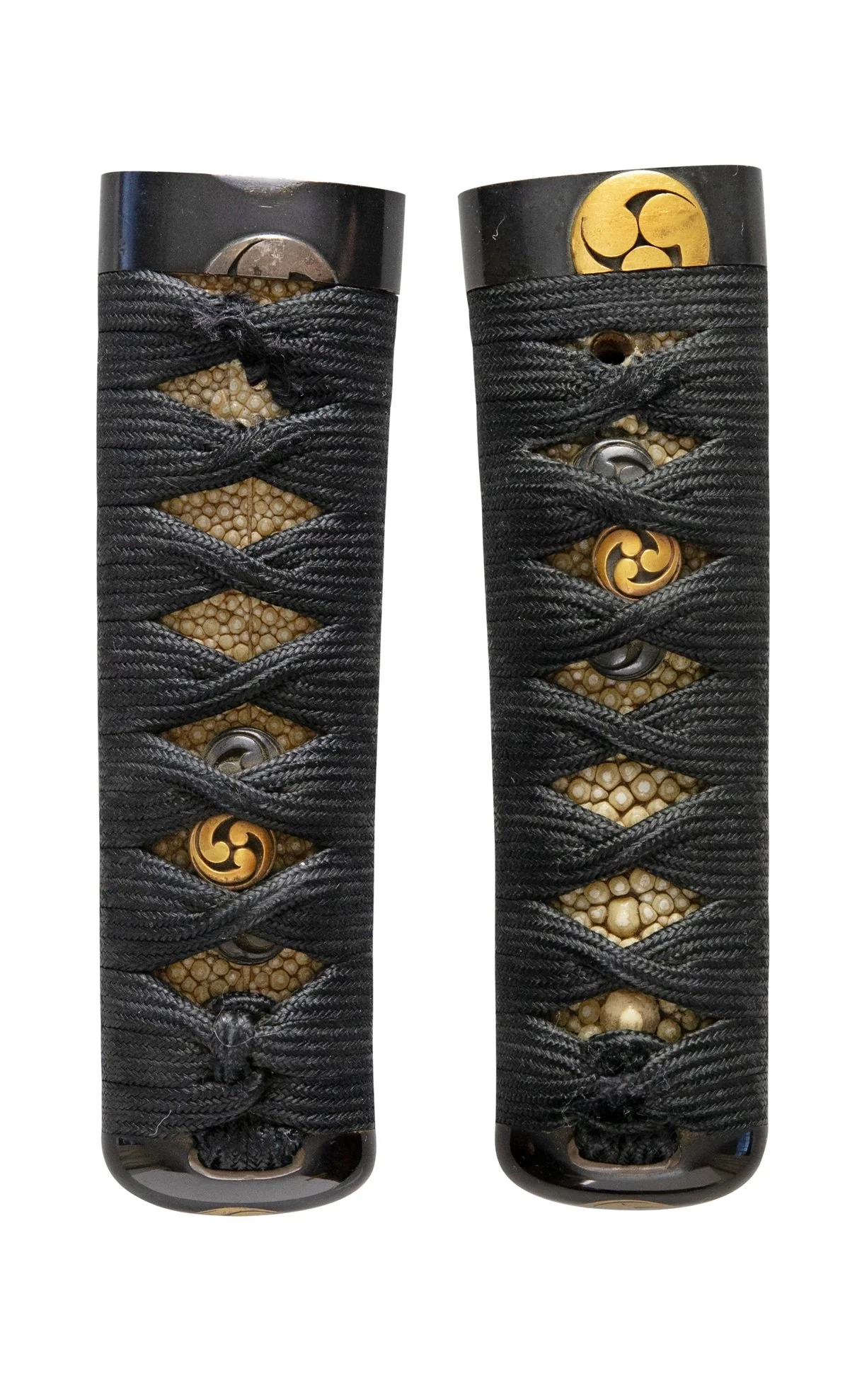
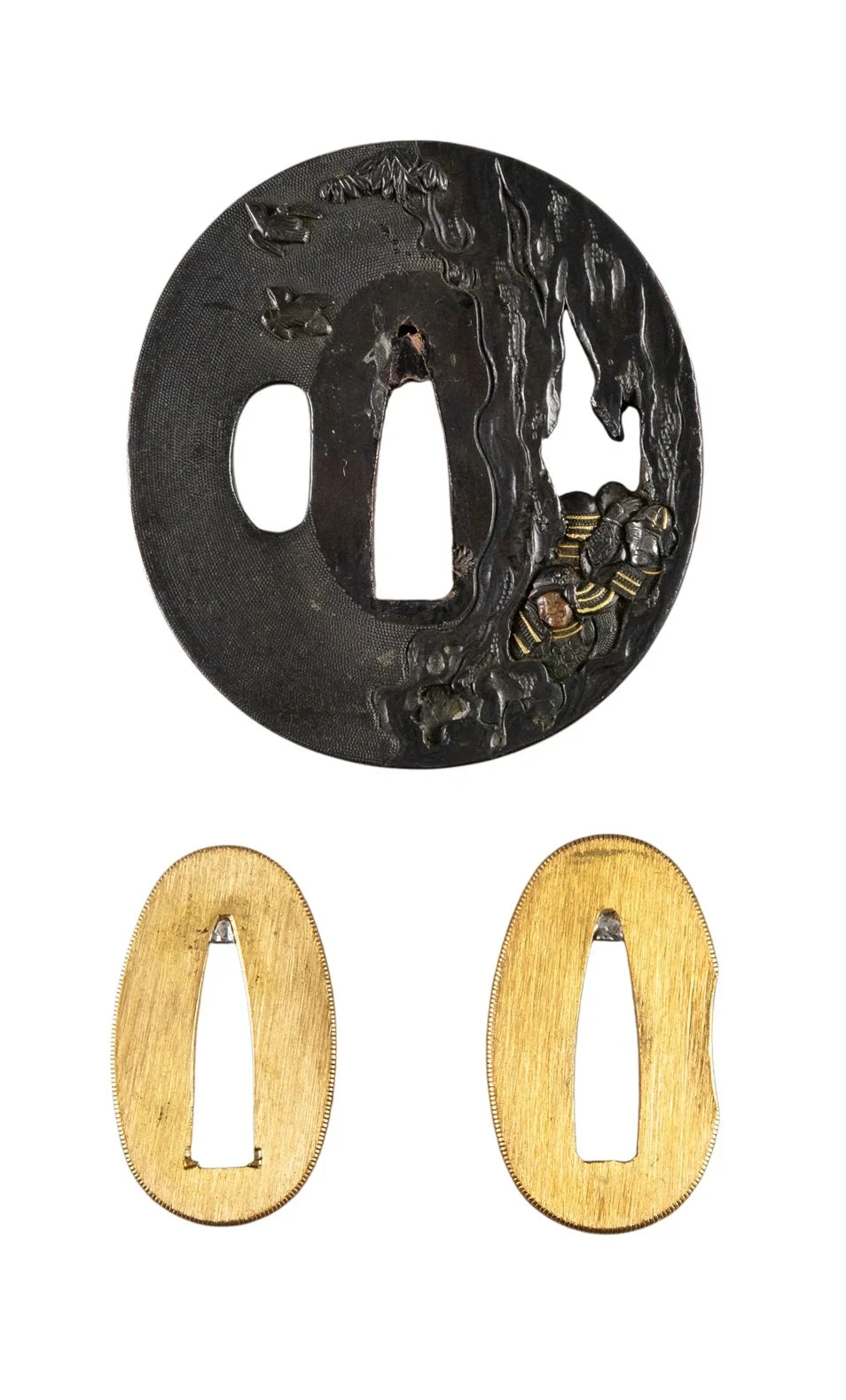
Along with high quality Edo period koshirae adorned with mitsudomoe mon. Additional wooden shirasaya with sayagaki by noted connoisseur Tanobe Michihiro.
Measurements:
Nagasa: 36.5 cm
Sori: 0.5 cm
Motohaba: 2.5 cm
Sakihaba: - - -
Kissaki: - - -
Nakago: 12.7 cm
Kasane: 4.2 mm